

A little preparation before your appointment can make your eye test more useful than many people realise. If you have ever sat in the chair and then remembered a symptom on the drive home, or turned up in contact lenses when you were not sure whether that mattered, you are not alone. Knowing how to prepare for eye test appointments helps us get a clearer picture of your vision, your eye health and any day-to-day problems you may be managing.
For most people, an eye test is straightforward and nothing to worry about. Still, a few simple checks beforehand can save time and help you get better advice, whether you need an updated prescription, support with dry eyes, help with screen strain or reassurance that everything is healthy.
How to prepare for eye test visits before the day
The best preparation starts at home, not in the test room. Think about why you booked the appointment in the first place. It may be obvious if your distance vision has become blurry, but sometimes the signs are more subtle. Headaches at the end of the working day, tired eyes when reading, needing more light, struggling with glare when driving at night or finding that your child screws up their eyes to see the board can all be useful details to mention.
If something has changed, make a note of it. Try to pin down when it started, whether it is constant or occasional, and if it affects one eye or both. This helps your optometrist build a more accurate picture. “My vision seems worse” is a helpful starting point. “Road signs are fuzzy in the rain and my eyes sting by late afternoon” is even more useful.
It is also worth thinking about your habits. If you spend long hours on screens, work outdoors, wear safety eyewear, play sport or switch between glasses and contact lenses, say so. Good eye care is not just about reading letters on a chart. It is about how your eyes cope in real life.
Bring the things you actually use
One of the simplest answers to how to prepare for eye test appointments is this: bring your current glasses with you. Bring the pair you wear most often, but also any reading glasses, computer glasses or prescription sunglasses you rely on regularly. If you have varifocals and still keep an older pair in a drawer because they somehow feel better for certain tasks, bring those too.
This gives your optometrist a useful comparison point. It can show whether your prescription has changed, whether your lenses are still doing the job they were designed for and whether your frame fit is affecting comfort or vision.
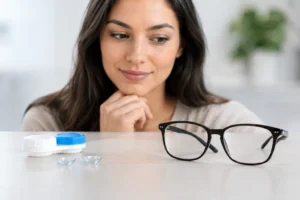
If you wear contact lenses, mention that when booking if possible. In some cases, you may be advised to leave them out for a period before your appointment, especially if a more precise assessment is needed. It depends on the type of lenses you wear and the reason for the visit. Daily lens wearers may be fine with a shorter break than someone who uses longer-wear lenses, but it is always better to check rather than guess.
Have your health information ready
Your eyes do not exist in isolation from the rest of your health. Certain medical conditions can affect vision and eye health, and some medications can do the same. That is why it helps to arrive knowing what medicines you take, including regular prescriptions, eye drops and anything new started recently.
If you have diabetes, high blood pressure, migraines, thyroid problems or autoimmune conditions, mention them. If dry eye has become more noticeable since starting a medication, or if your eyes feel different after surgery or a health change, say so. Even if it seems unrelated, it may matter.
Family history is useful as well. If close relatives have had glaucoma, macular degeneration, retinal problems or early cataracts, this is worth sharing. It does not mean you will develop the same issue, but it helps shape the advice and monitoring you receive.
What to do on the day of your eye test
Try to arrive a little early rather than rushing in flustered. Filling out forms in a hurry often leads to forgotten details, and if you wear glasses all the time, forgetting them because you were distracted is surprisingly common.
If your appointment may involve dilating drops, it is sensible to ask beforehand. Not every eye test includes them, but if they are needed, your vision can stay blurry for a while afterwards and you may feel more light-sensitive. In that case, bringing sunglasses is a good idea, and you may prefer not to drive. This is not always necessary, but it is worth planning for if advised.
Try not to worry about “getting it wrong” during the test. People often feel under pressure when asked which lens looks clearer, especially when the difference seems tiny. That is completely normal. There is no prize for speed, and a good optometrist would always rather you take your time and answer honestly than rush.
If you are bringing a child, a bit of preparation can help there too. Keep it relaxed. There is no need to coach them to say what they think they should say. Simply explain that someone is going to check how well their eyes are working, a bit like checking height or hearing. Children usually do best when they feel it is routine and not a test they can fail.
Questions worth asking during the appointment
An eye test should not feel like a one-way process. It is your chance to ask questions, especially if your eyes have been bothering you or your visual needs have changed.
If your prescription has altered, ask what that change means in practice. A small shift may matter a great deal for driving, screen work or reading, while a larger number on paper does not always feel dramatic in daily life. If you are choosing new lenses, ask about the pros and cons of different options rather than assuming the most expensive option is automatically the right one.
This is particularly relevant if you spend your day moving between tasks. Someone working at a laptop, driving to meetings and then reading in the evening may benefit from different lens choices than someone who mainly needs clear distance vision outdoors. There is no one-size-fits-all answer.
If you have symptoms such as dry, gritty eyes, watery eyes, irritation during hay fever season or discomfort with contact lenses, bring them up even if they seem minor. These concerns are very common, but the right advice depends on the cause. For one person, the issue may be screen habits. For another, it may be eyelid health, allergies or the fit of a lens.
Common mistakes people make when preparing
The most common mistake is assuming the appointment is only about reading the chart. A proper eye examination looks at much more than whether you need stronger glasses. It also checks the overall health of your eyes and can sometimes pick up changes you have not noticed yourself.
Another mistake is downplaying symptoms because they come and go. Intermittent blur, flashes, floaters, soreness or headaches are still worth mentioning. Some are harmless, some need monitoring and some need prompt attention. The point is not to self-diagnose before you come in. It is to give a full picture.
People also sometimes leave their glasses at home because they think wearing them is enough. Or they book an eye test because they are struggling, then forget to mention that the problem is worst when driving at night or after eight hours at a screen. The detail matters.
How to prepare for eye test appointments if you have specific concerns
If your main concern is driving, think about when your vision feels least reliable. Night glare, rain, low winter light and oncoming headlights can all affect how comfortable you feel behind the wheel. Mentioning that helps guide both the test and any lens recommendations.
If your concern is reading or computer use, think about distance and timing. Is reading small print harder than it used to be? Do your eyes tire by lunchtime? Are you constantly adjusting your posture to see the screen more clearly? These clues often tell us more than a simple “my eyes feel strained”.
For parents, it helps to note any changes in your child’s behaviour. Sitting close to the television, losing their place while reading, rubbing their eyes, reduced concentration or complaints of headaches can all be relevant. Children do not always realise that what they are seeing is unusual, so behavioural clues can be important.
Older patients may find it useful to bring a note of recent changes, especially if there are several things to remember. That might include trouble with steps, more glare, difficulty recognising faces at a distance or needing brighter light for everyday tasks. None of these should be brushed off as “just age” without being checked properly.
At Mark Darling Eyecare & Opticians, we know most people are not looking for a rushed, impersonal appointment. They want clear answers, sensible advice and the confidence that someone has taken the time to see them as an individual.
The best preparation is simple: bring your current eyewear, know your medications, think about any changes you have noticed and come ready to describe how your eyes cope with everyday life. That way, your eye test becomes more than a routine check – it becomes a proper conversation about seeing comfortably and keeping your eyes healthy for the long term.