
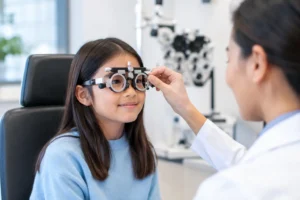


A new pair of glasses should make daily life clearer, not leave you constantly pushing them up your nose or wondering whether something feels quite right. Knowing how to adjust new glasses begins with recognising the difference between a normal settling-in period and a fit that needs attention.
Your frames are not simply an accessory. They need to sit in the right position for your prescription, your comfort and the way you use your eyes throughout the day. Even beautifully chosen frames can feel wrong if they are not properly fitted to you.
Give your eyes and glasses time to settle
It is common for new glasses to feel unfamiliar for the first few days. Your brain may need time to adapt to a new prescription, especially if your lenses are stronger than before, include a reading addition, or correct astigmatism. Some people notice a slight sense of distortion at the edges of their vision, altered depth perception on stairs, or mild visual fatigue while their eyes adjust.
A new frame can also feel different simply because its weight, bridge shape or temple arms are unlike your previous pair. If you have moved to a larger frame, thinner lenses, varifocals or a more curved style, the change can be more noticeable.
Try wearing your glasses consistently rather than switching back and forth to your old pair. For most people, the initial unfamiliar feeling settles within a few days. However, discomfort should not be something you have to put up with. Pressure, slipping, persistent headaches or blurred vision deserve a professional check.
How to adjust new glasses safely
The safest answer is simple: let an optician make the adjustments. Frames are carefully set up to sit at the correct height and angle in front of your eyes. A small change to the nose pads, temple arms or frame front can make a considerable difference, but it can also affect lens positioning if done incorrectly.
At home, there are a few sensible checks you can make without trying to bend anything. Put your glasses on using both hands and look in a mirror. They should sit level across your face, with the frame centred over your eyes. They should not slide down when you look down, pinch tightly at your temples or leave deep marks on the bridge of your nose.
If something is not right, make a note of when it happens. For example, do they slip only when you are warm? Do they hurt behind one ear after an hour at your desk? Is one lens sitting visibly higher than the other? This information helps your optician identify the adjustment required quickly.
Avoid bending the arms, twisting the frame front or tightening screws with a household screwdriver. Modern frames can be delicate, and acetate, metal and rimless designs each respond differently to pressure and heat. A well-meaning adjustment at home can lead to a snapped hinge, stretched arm or lenses popping out of the frame.
If your glasses keep slipping down
Glasses that slide down are often caused by a frame that is too loose around the ears, nose pads that need repositioning, or a bridge that is not sitting securely. Oily skin, make-up, moisturiser and warm weather can make slipping more noticeable too.
Clean the nose pads and bridge regularly with a lens-safe cleaner and microfibre cloth. This can help, but if the problem continues, the frame needs a fitting adjustment. Your optician may alter the nose pads, reshape the temple ends or assess whether the frame is the right fit for your facial features.
If they feel tight behind your ears or at your temples
Pressure behind the ears can cause soreness, while tightness at the temples may lead to headaches or leave marks on the skin. These are not signs that you need to “break in” the glasses. They usually mean the temple arms need gentle reshaping, or the frame width needs assessing.
It is particularly worth checking this if you wear your glasses all day at work, drive regularly or use screens for long periods. A fit that feels only slightly tight in the morning can become uncomfortable by late afternoon.
If one side sits higher than the other
Uneven glasses can happen if the frame has been knocked, sat on, or simply needs a minor adjustment after regular wear. It can also be related to natural differences between your ears or the shape of your nose. Faces are not perfectly symmetrical, so a skilled fitting is about making the glasses sit correctly on you, rather than making the frame look mathematically level when placed on a counter.
An optician can adjust the frame to achieve a balanced position and ensure the optical centres of the lenses remain correctly aligned with your eyes.
When a fitting issue may be a lens issue
Not every problem with new glasses is caused by the frame. If the glasses are comfortable but your vision remains unclear, strained or distorted after a reasonable settling-in period, it is worth returning for advice.
Contact your optician promptly if you experience persistent double vision, nausea, severe dizziness, headaches that do not ease, or if one eye seems noticeably clearer than the other. This does not automatically mean there is a problem with your prescription, but it should be checked rather than ignored.
Varifocal lenses deserve a little extra patience. You need to point your nose towards what you want to see and use different areas of the lens for distance, intermediate tasks and reading. The fitting height and frame position are especially important with varifocals, so slipping frames or poorly positioned lenses can make adaptation much harder.
Children’s glasses should also be checked if they are slipping, crooked or causing marks. Children are active, and a secure, comfortable fit helps them wear their glasses consistently. A frame that frequently falls down may lead a child to look over the top of the lenses, reducing the benefit of their prescription.
Look after the fit between appointments
A few everyday habits can help your glasses stay comfortable for longer. Always remove them with both hands, rather than pulling them off one side. Store them in their case when not in use, rather than placing them lens-down on a table or leaving them loose in a bag. Keep them away from high heat, including a car dashboard, as heat can warp some frame materials and affect lens coatings.
Clean your glasses with lukewarm water, a suitable lens cleaner and a clean microfibre cloth. Avoid tissues, kitchen roll and clothing, which can scratch lenses over time. If screws begin to loosen or a nose pad becomes discoloured, do not wait until the glasses become uncomfortable – bring them in for attention.
A professional adjustment is part of good eyecare
A proper fitting is not an optional extra after choosing a frame. It is part of making sure your glasses work as they should. At Mark Darling Eyecare & Opticians, we take the time to see each person as an individual, including the practical details that make a pair of glasses a pleasure to wear every day.
If your new glasses are not sitting comfortably, do not struggle on or attempt a repair at home. A short fitting check can often turn a frustrating pair of glasses into the pair you reach for without thinking.