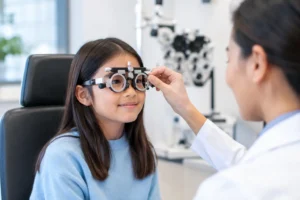


An eye test is not simply about reading letters from a chart. If you have been wondering what happens during eye test appointments, the short answer is that we assess both how clearly you see and the health of your eyes. It is a chance to talk about changes you have noticed, ask practical questions and receive advice that is specific to you – not a rushed, one-size-fits-all result.
At Mark Darling Eyecare & Opticians, we take the time to see you as an individual. Whether you are booking for yourself, your child or an older relative, knowing what to expect can make the appointment feel much more straightforward.
What happens during an eye test?
Most eye tests begin with a conversation. Your optometrist will ask whether you have noticed blurred vision, headaches, tired eyes, dryness, flashes or floaters, difficulty driving at night, or trouble focusing on screens and close work. These details matter. A prescription may explain some symptoms, but dry eye, allergies, medication, general health and lifestyle can all affect comfort and vision too.
You may also be asked about your medical history and that of close family members. Conditions such as glaucoma, diabetes, high blood pressure and macular degeneration can have an effect on the eyes. Tell your optometrist about any medication you take, previous eye injuries or operations, and whether you already wear glasses or contact lenses.
Bring your current glasses, even if you rarely wear them, along with any previous prescription if you have it. If you use contact lenses, it is helpful to know the brand, wearing pattern and whether they still feel comfortable by the end of the day.
Checking your vision
The familiar letter chart is usually part of the appointment, but it is only one part. You will normally be asked to read letters at a distance with each eye separately and then with both eyes together. There may also be a near-vision check, using smaller print similar to a book, mobile phone or computer screen.
For younger children or anyone who cannot read letters, different charts and picture-based tests can be used. The aim is not to catch anyone out. It is to gain an accurate picture of how each eye is working.
If your existing glasses are not giving you the clarity or comfort you expect, this is a good time to say so. You may need a prescription adjustment, a different lens design, an anti-reflection coating, occupational lenses for screen work, or simply a frame that sits more securely and comfortably.
Finding the right prescription
Your optometrist will then measure how your eyes focus. You may look through a series of lenses and be asked a question such as, “Which is clearer, one or two?” There is no clever answer and no need to worry if both seem similar. Honest responses help us fine-tune the result.
Modern instruments can provide useful starting measurements, but they do not replace professional judgement. The final prescription considers what the measurements show, how you use your eyes and what feels naturally clear. For example, a person who spends long days moving between meetings, driving and a laptop may benefit from a different solution to someone who mainly needs help with reading.
Your optometrist may also check how your eyes work together, particularly if you experience double vision, eye strain, headaches or difficulty concentrating. These assessments can include following a light with your eyes or looking at a target through prisms.
Eye health checks look beyond your prescription
A clear sight test does not always mean the eyes are completely healthy, which is why the health examination is such a valuable part of an eye test. Your optometrist will examine the front of your eyes, including the eyelids, tear film, cornea and lens. This can help identify concerns such as dry eye, blepharitis, allergies, cataracts or contact lens-related irritation.
You will usually be asked to rest your chin on a piece of equipment and look at a small light. It is painless and takes only a moment. The optometrist may use magnification and different lights to examine the eye in detail.
They will also assess the retina and optic nerve at the back of the eye. These structures are not visible to you in a mirror, yet they can show early signs of conditions that may not initially affect sight. Depending on your needs and the equipment used, this may involve retinal imaging or other detailed scans. The images can be useful for monitoring changes over time as well as explaining what we can see.
Some patients need an eye pressure check, particularly where there is a family history of glaucoma, certain findings during the examination or age-related risk. Air-puff instruments are familiar to many people, though other gentle methods may be used. The result is considered alongside the appearance of the optic nerve and other findings. A single pressure reading alone does not diagnose glaucoma.
Will drops be used?
Most routine eye tests do not require eye drops. However, dilating drops may sometimes be recommended so the optometrist can gain a wider, clearer view of the retina. They are more commonly used when examining children, investigating particular symptoms or assessing certain eye-health concerns.
Dilating drops can make close vision blurry and increase light sensitivity for several hours. You should not drive until your vision has returned to normal, so it is sensible to ask about this when arranging your appointment if drops might be needed. Sunglasses can make the journey home more comfortable on a bright day.
What your results might mean
At the end of the appointment, your optometrist will explain the findings in plain language. You may be told that your eyes are healthy and your prescription has not changed. You may need new glasses, an update to your contact lenses, advice for dry or irritated eyes, or a review sooner than usual.
If something needs further investigation, this does not automatically mean there is a serious problem. Sometimes an optometrist will monitor a finding, recommend a particular treatment or refer you to your GP, an ophthalmology department or another specialist. The important thing is that concerns are identified and managed appropriately rather than left to guesswork.
If you do need glasses, choosing them should not feel like an afterthought. The right frame needs to fit well, feel comfortable and suit your prescription as well as your personal style. Lens choice matters too. Thinner lenses may improve comfort for stronger prescriptions, while varifocals, reading lenses, driving lenses and specialist options each suit different routines.
How long does an eye test take?
A standard eye test often takes around 30 minutes, although it can take longer when a more detailed assessment is needed or when there are specific concerns to discuss. A contact lens appointment, children’s assessment or dry eye consultation may have a different format and timescale.
It is worth allowing yourself enough time, especially if you would like to choose new eyewear afterwards. Rushing from the testing room into a frame decision rarely gives you the best experience. A good dispensing appointment considers how your glasses will be used, how they sit on your face and which lenses will make the greatest practical difference.
When should you arrange an eye test?
Even if your sight feels fine, regular eye examinations are worthwhile because some eye conditions develop gradually without obvious warning signs. How often you should attend depends on your age, eye health, family history and any advice from your optometrist. Many adults are advised to have an examination every two years, while some people need more frequent reviews.
Do not wait for a routine appointment if you have sudden loss of vision, a curtain or shadow across your sight, new flashing lights, a sudden shower of floaters, severe eye pain, significant redness or an eye injury. Seek urgent medical advice for these symptoms.
For everyday questions – whether your child is struggling to see the board at school, your eyes feel gritty after screen use, or night driving has become harder – an eye test offers a calm, informed starting point. It is time set aside to look after your vision, understand your options and leave feeling clearer about what your eyes need.