
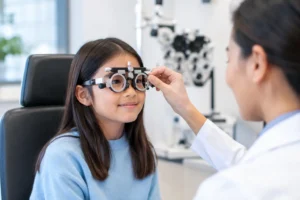


A frame can look perfect on a screen, arrive at your door and still spend its life in a drawer. It may slip, pinch behind the ears, sit crookedly or leave you wondering why your new prescription does not feel quite right. When weighing up optician versus online glasses, the real question is not simply where you can spend less. It is what you need your glasses to do for you, every day.
Buying online can be convenient, particularly if you already know a frame shape that suits you and have a straightforward, up-to-date prescription. Visiting an independent optician brings a different kind of value: professional guidance, careful fitting, a choice of lenses explained in plain English and someone local to help if things need adjusting.
Optician versus online glasses: the key differences
Online retailers can offer a wide range of frames at attractive prices. For some people, that makes ordering a second pair for occasional use feel sensible. You can browse in the evening, compare styles quickly and have glasses posted directly to you.
The limitation is that glasses are not a one-size-fits-all purchase. Your prescription is only part of the picture. How a frame sits on your nose, the position of the lenses in front of your eyes, the lens material and the way you use your glasses all affect how well you see and how comfortable you feel.
At an optician, you can try frames properly, see their true colour and weight, and get an honest opinion from someone who understands face shape, fit and prescription requirements. More importantly, the dispensing process is tailored to you rather than to a standard set of measurements entered online.
Your prescription needs more than the numbers
A valid prescription includes details such as your sphere, cylinder and axis. If you need reading help, it may also include an addition. These figures matter, but they do not always tell an online supplier everything needed to make lenses that perform at their best.
Pupillary distance, for example, helps place the optical centre of each lens correctly. For varifocals, occupational lenses and stronger prescriptions, further measurements are often needed. The height of the lens in the frame, the angle at which the frame sits and the distance between the lens and your eye can all make a noticeable difference.
A qualified dispensing optician or experienced optical adviser takes these measurements with the chosen frame on your face. That attention can be particularly valuable if you have a high prescription, astigmatism, a prism correction, varifocals or a history of struggling to adapt to new glasses.
Price matters, but compare what is included
It is understandable to look at the headline price first. Online glasses may appear considerably cheaper, especially where a basic lens is included with the frame. Yet the final price can change once you add thinner lenses, anti-reflection coating, sun protection, a blue-light filter or varifocal lenses.
The better comparison is between like for like. Ask what lens design is being supplied, whether coatings are included, what happens if the glasses need adjustment and what the returns process allows if the prescription feels uncomfortable. A low initial price is not always the best value if the glasses need replacing quickly or are never worn.
At a local optician, the cost should be clearly explained before you decide. You can discuss where your budget is best spent. For some patients, a durable everyday frame and good anti-reflection lenses are the priority. For others, a separate pair for computer work, driving or reading may make daily life easier than trying to make one pair do everything.
The frame is a piece of equipment, not just an accessory
Style matters. Glasses are on your face every day, and feeling like yourself in them is a good reason to take time over the choice. But comfort and stability matter just as much.
A well-fitted frame should sit securely without pressing uncomfortably on your nose or temples. The lenses should be positioned appropriately for your eyes, and the frame should not slide when you look down. Small adjustments to the nose pads, sides and tilt can transform the way a pair feels.
This is often where in-person care earns its keep. Frames can move over time, especially in warm weather, with regular wear or when they are taken on and off frequently. Being able to pop in for an adjustment can prevent a minor annoyance from becoming a reason to stop wearing your glasses.
When online glasses can make sense
Online ordering is not automatically the wrong choice. It can work well when your prescription is uncomplicated, you have recently had a thorough eye examination, and you know the measurements and frame style that suit you. It may also be useful for a back-up pair, prescription sunglasses or a familiar frame you have worn before.
Even then, use a current prescription and check whether it is still within its recommended review period. An expired prescription may mean your vision has changed, while an eye examination can also pick up concerns that have nothing to do with how clearly you can read a chart.
Be cautious about ordering online if you are buying your first varifocals, if you are having headaches or blurred vision, or if you have been advised that you need specialist lenses. Children’s glasses are another situation where correct fit, durability and ongoing adjustments are especially important. A child may not tell you that their glasses are uncomfortable or that they are looking over the top of them at school.
Why eye health should sit alongside style and price
Glasses correct vision, but an eye examination does more than produce a prescription. It gives your optometrist the opportunity to assess the health of your eyes and, where appropriate, discuss symptoms such as dry, sore or tired eyes, flashes and floaters, or changes in vision.
If you spend long days on screens, drive frequently at night or find bright lights troublesome, say so. The right lens recommendation may be different for someone who works between several monitors than for someone who needs clear vision for hobbies, reading and driving. There is no universally best lens – there is the lens that suits your eyes and your routine.
This conversation is difficult to reproduce in an online checkout. At Mark Darling Eyecare & Opticians, we take the time to understand how you use your vision, then help you make a practical choice without unnecessary jargon.
Aftercare is part of owning glasses
New glasses can need a settling-in period, particularly after a prescription change or with varifocal lenses. That is normal, but you should not be left to work out alone whether what you are experiencing is expected or whether something needs checking.
An optician can assess the fit, recheck measurements and talk through how to use your lenses. They can also make routine adjustments as frames loosen, advise on cleaning and help with small repairs where possible. This ongoing support is reassuring for anyone, but especially for people who rely on their glasses from the moment they wake up.
A simple way to decide
If cost is your main concern and your needs are straightforward, online glasses may be a reasonable option, provided you order carefully from a current prescription. If you want help choosing frames, need more complex lenses, value ongoing adjustments or simply prefer to speak to someone who knows your eye care history, an optician is likely to offer better long-term value.
Your glasses should feel natural enough that you forget you are wearing them, while helping you see the people, places and details that matter. A thoughtful fitting and the chance to ask questions face to face can make that everyday difference.